
Blooming
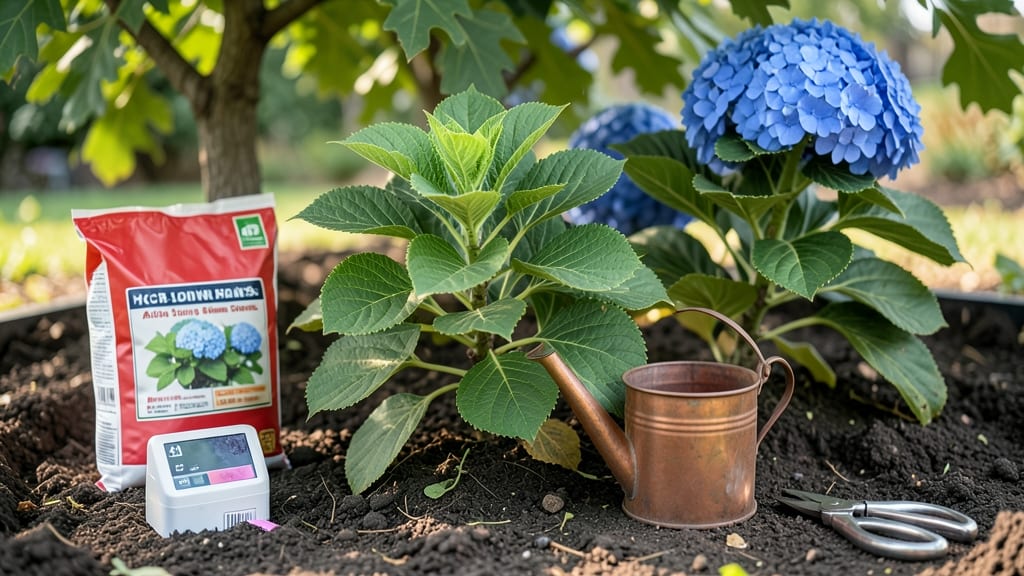
Why didn't my hydrangea bloom this year? If your hydrangeas are putting out lush green foliage instead of flowers, they’re screaming one of three problems: too much nitrogen, wrong soil pH, or last year's pruning mistakes. 🌿 I've seen gardeners face this nightmare—all that energy going to leaves instead of blooms. The good news? Next season's flowers are just a soil test and a few adjustments away.
First, check your sunlight—hydrangeas need at least 6 hours of sun daily, but too much afternoon sun can stress them. Then grab a soil pH test kit (they're cheap and game-changing).
Most blooming hydrangeas need pH 5.5-6.2—too alkaline, and your flowers stay hidden. Over-fertilizing with nitrogen-heavy feeds is another common culprit; switch to a balanced bloom booster instead.
By adjusting your soil pH and pruning correctly this winter, you'll see buds forming by early summer. The transformation is shocking—last year's leafy disappointment becomes next year's vibrant pink, blue, or white clusters. Think of it as a reset button for your plants.
This works for both in-ground plants and container-grown hydrangeas. The secret is patience and paying attention to what your plants actually need, not what you think they should want. Let's get those blooms back!
Hidden Reasons Behind No Blooms
Hydrangeas are the showstoppers of summer gardens—until they’re not. If your once-vibrant bushes are sporting lush leaves but zero flowers this year, don’t panic. The culprit is often one (or more) of these hidden but fixable factors.
Understanding the science behind them will help you diagnose the issue and bring back next year’s blooms.
Hydrangeas are sun-worshippers, but not all varieties thrive in the same conditions. Most bigleaf and oakleaf hydrangeas need at least 4–6 hours of direct sunlight daily to produce blooms. Too much shade (especially deep, dense shade) starves the plant of the energy it needs to form flower buds.
Why it happens: - Photosynthesis slowdown: In low light, chlorophyll production drops, reducing sugar reserves. Without enough energy, the plant prioritizes leaf growth over flowers. - Bud formation timing: Hydrangeas set next year’s blooms in late summer/early fall. If the plant is stressed by shade during this critical window, it may abort flower buds entirely. - Variety mismatch: Some hydrangeas (like panicle types) tolerate partial shade better, but even they may skip blooming if light dips below 3 hours daily.
Actionable fix:
- 🔍 Audit your plant’s light: Use a light meter or observe shadows—if your hydrangea is in a spot that’s shaded by trees, walls, or other plants for most of the day, it’s likely the culprit.
- 🌞 Prune strategically: Trim overhanging branches from nearby trees or relocate the plant to a sunnier spot. Even moving it 3–5 feet can make a difference.
- 💡 Supplement with grow lights (temporary fix): If relocating isn’t an option, a 100W LED grow light placed 1–2 feet away for 4–6 hours daily can encourage bud formation.
Hydrangeas are finicky about temperature—too hot, too cold, or sudden swings can halt blooming. While they love summer warmth, they also need a cool dormancy period to trigger flower bud development.
Why it happens: - Heatwaves without recovery: If temperatures stay above 85°F (29°C) for weeks, the plant’s metabolic processes slow, and it may skip bud formation. This is especially true for bigleaf hydrangeas, which are native to cooler climates. - Late-season heat spikes: If summer lingers into October, the plant may not receive the 10–14 days of cooler temps (below 70°F/21°C) needed to set buds for next year. - Early spring warmth: Buds form in late summer, but if winter was unusually warm, the plant may break dormancy too early, only to be shocked by a late frost—killing potential blooms.
Actionable fix:
- ❄️ Protect from late frosts: If your area has unpredictable spring weather, cover young buds with frost cloth or a lightweight blanket until danger of frost passes.
- 💦 Mulch heavily in fall: Apply 3–4 inches of mulch around the base to insulate roots and encourage a gradual, natural dormancy.
- 🌿 Choose heat-tolerant varieties: If your climate is consistently hot, opt for panicle or smooth hydrangeas (like ‘Limelight’ or ‘Annabelle’), which handle heat better.
Hydrangeas are pH divas—their blooms change color based on soil acidity, but if the pH is too extreme (either too high or too low), they may refuse to bloom altogether.
Why it happens: - Alkaline soil (pH 7.0+) blocks bloom production: Hydrangeas need acidic to slightly acidic soil (pH 5.2–6.2) to absorb enough phosphorus and micronutrients for flower development. In alkaline conditions, phosphorus becomes unavailable, starving the plant. - Overly acidic soil (pH < 5.0) stresses roots: While hydrangeas love acidity, extreme pH levels can damage roots, reducing the plant’s ability to uptake water and nutrients—leading to weak or no blooms. - Compacted or poor-draining soil: Even with the right pH, if soil is waterlogged or lacks organic matter, roots suffocate, and the plant diverts energy to survival instead of flowers.
Actionable fix:
- 🧪 Test your soil: Use a home pH test kit (or send a sample to a local extension office) to check levels. Aim for 5.2–6.2 for optimal blooming.
- 🍋 Lower pH with organic amendments: For alkaline soil, mix in sulfur, peat moss, or pine needles (work into the top 6–12 inches of soil). For overly acidic soil, add lime or wood ash sparingly.
- 💧 Improve drainage and fertility: Amend soil with compost or well-rotted manure to loosen texture and add nutrients. Avoid fresh manure, which can burn roots.
Timing is everything when it comes to hydrangea pruning. Cutting at the wrong season can remove next year’s blooms before they form.
Why it happens: - Pruning in late winter/early spring: Most hydrangeas (especially bigleaf and oakleaf) set buds on old wood (last year’s growth). If you prune before mid-spring, you risk cutting off flower buds before they emerge. - Over-pruning in summer: Even if you wait until spring, aggressive pruning (cutting back more than 1/3 of the plant) can shock the hydrangea, reducing its energy for blooming. - Confusing varieties: Panicle hydrangeas bloom on new wood, so they can be pruned in late winter. But if you treated yours like a bigleaf variety, you may have trimmed off potential blooms.
Actionable fix:
- ⏰ Prune at the right time:
- Bigleaf & Oakleaf: Wait until just after blooming (late summer/early fall) or early spring (March–April)—but only remove dead or crossing branches.
- Panicle & Smooth: Prune in late winter/early spring (before new growth starts) to shape the plant.
- 📝 Label your varieties: If you’re unsure which type you have, snap a photo of the flower shape/color and research it—this avoids costly pruning mistakes.
- ✂️ Avoid "rejuvenation pruning": Cutting back to the ground is a last resort and can take 2–3 years for hydrangeas to
Revive Your Hydrangeas Now
---
Don’t let this year’s lack of blooms be a lost cause! With the right fixes, your hydrangeas can bounce back—and next season could be their most stunning yet. Below, we’ve mapped out practical solutions for each common reason your hydrangeas skipped blooming, plus prevention tips to keep them thriving long-term.
Think of this as your hydrangea rescue manual.
---
If your hydrangea is a newbie (under 2–3 years old) or got too much nitrogen last season, it likely redirected energy to leaves instead of flowers. Here’s how to reset:
- 🍳 Prune Strategically (Now!) - Cut back 1/3 of the oldest stems (look for woody, thicker branches) to the first set of healthy buds.
This encourages new growth and blooms next year. - Pro tip: If your hydrangea blooms on old wood (like H. macrophylla), avoid heavy pruning in fall/winter—wait until late spring after blooms fade.
- 💪 Balance Fertilizer for Blooms - Switch to a low-nitrogen, high-phosphorus fertilizer (like 5-10-5 or 10-20-10) to prioritize flowers. - Feed in early spring (when new leaves emerge) and again after the first flush of blooms. - Pro tip: Organic options like bone meal or composted manure work too!
- 🌱 Prevent Next Year: - Label new plants with their age so you remember to hold off on heavy pruning for their first 2–3 years. - Use a slow-release bloom booster in early spring to avoid overfeeding.
---
Heatwaves, drought, or sudden cold snaps can shock hydrangeas into survival mode, skipping blooms. Here’s how to recover:
- 💦 Rehydrate Deeply (But Smartly) - Water slowly and deeply 1–2 times per week (check soil 2” down—if it’s dry, water again). - Avoid wetting leaves to prevent fungal issues (use drip irrigation or soaker hoses). - Pro tip: Mulch with 3–4 inches of organic mulch (like shredded bark) to retain moisture and regulate soil temp.
- 🌿 Shield from Heat Stress - If your hydrangea is in a hot, sunny spot, provide afternoon shade with a lightweight shade cloth (30–50% coverage). - Group plants together to create a microclimate with shared shade and humidity.
- 🌡️ Protect from Frost Bite - If late frosts damaged buds, prune off any blackened or mushy stems in early spring. - Prevention: Apply a light layer of mulch in fall (before hard frosts) to insulate roots.
---
Hydrangeas are pH divas—get this wrong, and they’ll either refuse to bloom or produce tiny, sad flowers. Here’s how to tweak your soil:
Problem
Test It
Fix It
Too Alkaline (pH 7.0+)
Use a soil pH test kit (available at garden centers). Blue hydrangeas? Likely alkaline.
Too Acidic (pH 5.0–)
Yellow leaves or stunted growth? Test your soil—green/purple hydrangeas thrive here.
Poor Drainage or Compacted Soil
Dig a hole—if water pools after 10 mins, drainage is bad.
- 🎯 Prevention for Next Season: - Test soil every 2–3 years—pH changes naturally over time. - Avoid over-fertilizing with synthetic mixes; opt for organic amendments like worm castings.
---
Timing and technique matter! If you pruned at the wrong time or too aggressively, your hydrangea may have lost its bloom signal. Here’s how to correct it:
- ⏰ Prune by Bloom Type: - Old Wood Bloomers (e.g., H. macrophylla): - Prune right after flowering (late summer/early fall) to avoid cutting off next year’s buds. - Only remove dead or crossing branches—never more than 20% of the plant. - New Wood Bloomers (e.g., H. paniculata): - Prune in late winter/early spring to encourage bold, summer blooms. - Cut back 1/3 of the oldest stems to the ground.
- 🔪 Emergency Fix for Over-Pruned Plants: - If you’ve already pruned too much, don’t panic! Hydrangeas are resilient. - Focus on feeding and watering to encourage new growth. - Pro tip: Take a photo of your plant’s shape before pruning next time—it’s your cheat sheet!
- 🌱 Prevention: - Label your hydrangeas by type (old vs. new wood) to avoid mistakes. - Prune on a dry, mild day with clean, sharp shears to prevent disease.
---
If your hydrangea is root-bound or competing with aggressive neighbors, it may have no energy left for blooms. Here’s how to free it up:
- 🌱 Divide or Transplant: - Dig up the plant and separate congested roots with a clean knife. - Replant divisions in well-draining soil with compost, spacing them 3–5 feet apart. - Pro tip: Water deeply after transplanting and avoid fertilizing for 4–6 weeks
Frequently asked questions
My hydrangea had blooms last year but none this year—what changed?
This is often a pruning mistake or nutrient shift. If you pruned too early in spring (before buds formed), you cut off next year's flowers. Also check your fertilizer—too much nitrogen (like lawn fertilizer) promotes leaves over blooms. Try a balanced bloom booster next spring instead.
Can I still get flowers if I pruned at the wrong time?
Yes! Even if you pruned too soon, hydrangeas are resilient. For old wood bloomers (like bigleaf), wait until after blooming this year to prune dead stems only. For new wood bloomers (like panicle), you can still shape them now—they'll bloom on fresh growth next year.
How do I know if my soil pH is wrong for hydrangeas?
Test your soil with a pH kit (available at garden centers). Hydrangeas need pH 5.2-6.2—too alkaline (above 7.0) blocks blooms. Blue flowers? Your soil is alkaline. Pink/purple? Acidic. Yellow leaves? Test immediately! Adjust with sulfur (to lower pH) or lime (to raise it).
Will moving my hydrangea help it bloom next year?
If it's in too much shade or compacted soil, relocating to morning sun with afternoon shade and amending with compost can make a dramatic difference. Just water deeply for the first 2 weeks after moving to reduce transplant shock.
Are there any quick fixes for this year's blooms?
No magic bullets—but you can prune now to encourage next year's flowers. For old wood types, cut back 1/3 of the oldest stems to the first healthy buds. For new wood types, prune aggressively in late winter. Add a phosphorus-rich fertilizer now to jumpstart bud formation.